Why Does a Token Need Market Making?

The data behind liquidity, execution, price discovery, and token survival
Launching a token has become almost frictionless, while building a market around it remains brutally difficult. Solana makes that gap visible at scale. Fundstrat estimates that around 20 million tokens were created on Solana since 2024, representing roughly 46% of all tokens tracked by CoinMarketCap in the dataset used for its 2026 report. Yet issuance volume says little about whether those assets ever develop usable secondary markets. DefiLlama's State of DeFi 2025 estimates that roughly 14 million tokens had been created on Pump.fun while only around 150,000, or 1.07%, progressed to Raydium or PumpSwap, where deeper liquidity and meaningful price discovery begin. The important conclusion is that the bottleneck has moved downstream: teams can create supply in minutes, while liquidity, trader attention, execution quality, treasury capital, and the operational ability to keep a market functioning remain scarce. A technically live token can therefore have a visible price and market cap while still being difficult to trade in meaningful size, which limits how much of that apparent value holders or the project treasury can actually realize.
🔢14,000,000 tokens created → ~150,000 reached deeper-liquidity venues → 1.07%
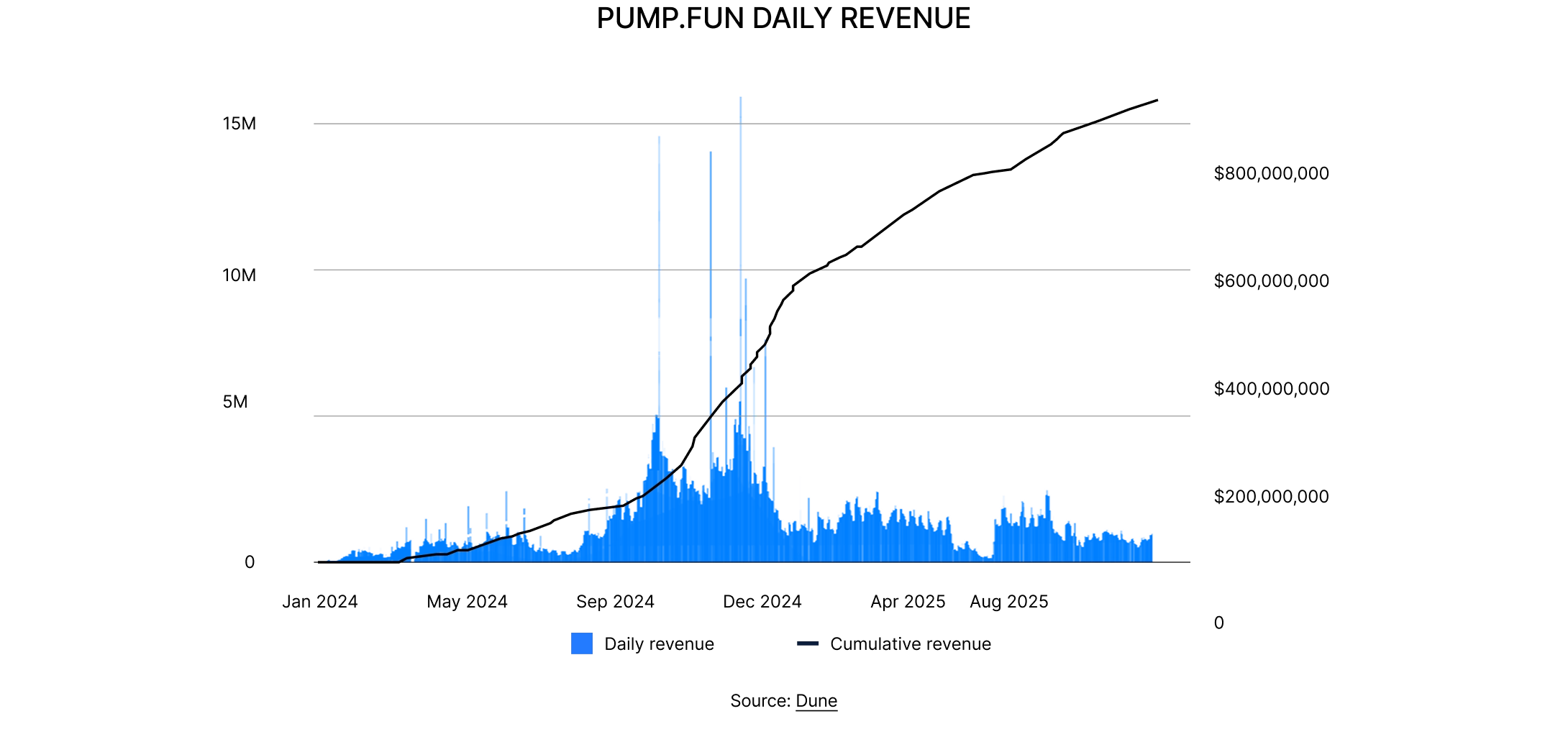
Those numbers point to a fundamental distinction: a token can exist onchain without having a functioning market. A functioning market needs buyers and sellers to transact at reasonably predictable prices, enough depth around the current price to absorb useful order sizes, and liquidity that can adapt when volatility or inventory changes. Without those conditions, the cost is distributed across the whole token economy: buyers pay more through slippage, sellers receive less than the screen price suggests, treasury positions become harder to monetize without moving the market against the project, and new demand is less likely to convert into durable trading activity. When market making works well, those frictions become an economic opportunity. Traders receive better execution, token teams gain a more credible secondary market, venues retain more order flow, and liquidity providers earn fees or spreads for supplying capital and managing inventory. That is why market making is best understood as market infrastructure for anyone trying to launch a token, manage token liquidity, and build a sustainable market after launch.
1. A token launch creates an asset. Liquidity creates the market.
Creating an SPL token defines supply, ownership, and transferability, while a healthy secondary market only emerges when capital is available on both sides of a trade and participants can transact without each order dramatically changing the price. That distinction matters commercially because a token's quoted valuation is only useful to the extent that buyers and sellers can actually execute around it. If a $5,000 order moves the market 20%, the displayed price is a weak representation of realizable value; if the same order moves it 1%, the market can support a much wider set of participants, from individual traders to funds and treasury operators. Four concepts determine that execution quality:
- Liquidity — What it means: Capital available to facilitate trades Why traders care: Determines how easily positions can be entered or exited
- Market depth — What it means: Liquidity available around different price levels Why traders care: Determines how large a trade the market can absorb
- Slippage — What it means: Difference between expected and realized execution Why traders care: Directly affects trading cost
- Price impact — What it means: How much an order itself moves the market Why traders care: Shows how fragile or resilient liquidity is
These variables reinforce one another. Thin liquidity creates higher price impact, higher price impact worsens execution, worse execution discourages meaningful order size, and weaker organic flow makes liquidity even harder to sustain. The result can become a feedback loop in which the token has a chart and a quoted price but remains economically difficult to use. Breaking that loop is where active liquidity management matters: deeper and better-positioned liquidity can reduce the cost of trading, which makes larger orders more viable and gives the market a better chance to retain real participants rather than only short-lived speculative activity. In a practical token-management workflow, that also means the team needs tools for responding to market conditions instead of treating liquidity as a one-time launch setting. Tsunammi's market-making toolkit is organized around that operational layer: Price Boost is used for strategic buy-side campaigns, Price Drop for controlled sell-side execution, and Smart Buy/Sell for trigger-based automated campaigns. The useful distinction is that these are separate controls for different market states. A team trying to support demand after a sharp selloff, rebalance inventory after a rally, or automate a buyback around predefined conditions should not have to rebuild the same execution logic manually each time.
2. What thin liquidity actually does to a trade
A simplified 50/50 constant-product AMM makes the economics visible immediately. If we ignore fees and assume equal dollar value on each side of the pool, the same $5,000 buy can be either a routine trade or a market-moving event depending entirely on the starting liquidity. In a $10,000 pool the order is equal to the entire quote-side reserve; in a $1 million pool it represents only 1% of that reserve. The table below shows how quickly execution quality changes as available depth increases:
- $10,000 — Quote-side reserve: $5,000 $5,000 buy as % of quote reserve: 100% Illustrative average execution impact*: ~100%
- $50,000 — Quote-side reserve: $25,000 $5,000 buy as % of quote reserve: 20% Illustrative average execution impact*: ~20%
- $250,000 — Quote-side reserve: $125,000 $5,000 buy as % of quote reserve: 4% Illustrative average execution impact*: ~4%
- $1,000,000 — Quote-side reserve: $500,000 $5,000 buy as % of quote reserve: 1% Illustrative average execution impact*: ~1%
Illustrative calculation for a constant-product x·y=k pool, 50/50 starting reserves, before fees and external arbitrage. It is intended to show the mechanics of depth, not to predict execution on a specific venue.
The practical point is that liquidity changes what a price actually means. A token can display a market price of $0.10 and a seemingly attractive market capitalization, yet that quote tells a trader or treasury operator very little if meaningful size cannot be executed anywhere near $0.10. The difference between 20% and 1% execution impact is effectively value transferred through slippage: the buyer receives fewer tokens for the same capital or the seller realizes less cash for the same position. This is why professional markets are judged by execution quality and depth alongside headline volume and market cap, and why token teams that want to attract larger participants have to think about how much order size their market can actually absorb. On Tsunammi this problem connects directly to Wallet Pools, CEX API connections, and Distribute Funds from CEX. Instead of funding operational wallets one by one, a team can create a pool of hot wallets for market-making operations, connect an exchange account as a funding source, and distribute capital across those wallets. That matters because execution quality is partly a capital-placement problem: having enough treasury capital is useful only when the right wallets can access it at the moment an operation has to run.
3. Market making is an execution problem
Market making is ultimately an execution and inventory-management problem. In traditional order-book markets, market makers quote bids and asks, update those quotes as fair value changes, manage inventory, and control exposure during volatility. Onchain markets implement the same economic function through a broader set of structures, including passive AMM pools, concentrated liquidity, RFQ systems, order books, and proprietary AMMs. The mechanism changes while the commercial objective remains familiar: keep enough executable liquidity near the market price so buyers and sellers can transact, manage the inventory created by those trades, and earn fees or spreads for taking on that capital and execution risk. In practice, that means the operator has to:
- keep liquidity available for buyers and sellers;
- quote or position liquidity around a usable market price;
- react when inventory becomes unbalanced;
- adjust to volatility and new information;
- reduce unnecessary execution cost for traders;
- maintain enough depth for the market's expected order sizes.
The strongest evidence that professional market management still matters in permissionless markets comes from the Bank for International Settlements study of Uniswap v3 liquidity provision. Reconstructing the top 250 pools, which represented about 96% of Uniswap v3 trading volume in the sample, the researchers found that sophisticated liquidity providers held roughly 80% of total value locked, managed positions more actively, captured a larger share of trading fees, and earned higher relative returns than retail liquidity providers. The gap was large enough that retail LPs lost money on a risk-adjusted basis on more than half of the days in the sample. The conclusion is important for an open market: giving everyone access to liquidity provision expands who can participate, while competitive results still depend heavily on tooling, execution, rebalancing speed, inventory management, and risk controls. In other words, the market is open, yet the economics still reward professionalism. Software that packages those operational capabilities into a usable interface can therefore create value by narrowing part of the gap between an independent token team and a specialized trading desk. Tsunammi is a good example of how that abstraction happens in product form. A market-making desk might maintain its own wallet infrastructure, funding rails, execution scripts, campaign controls, monitoring, and audit logs. Tsunammi exposes much of that workflow as product primitives: Wallet Pools for operational wallets, CEX funding and distribution for capital movement, Price Boost / Price Drop for directional campaigns, Smart Buy/Sell for automated conditions, plus MM History, Wallets Ops History, and Token Activity History for reviewing what happened after execution. The user still decides the strategy and capital allocation; the platform reduces the amount of infrastructure that has to be assembled before those decisions can be executed.
💡Open access changes who can enter the market. Better infrastructure still determines who competes effectively once they are there.
4. Solana shows what mature onchain market making can achieve
Solana is a useful laboratory for this market structure because it combines huge issuance volume with increasingly sophisticated execution infrastructure. Galaxy Research reported that in Q2 2026 Solana remained the No. 1 blockchain by DEX volume for the seventh consecutive quarter, with around 30% market share. That scale matters for token issuers because a liquid ecosystem attracts increasingly demanding counterparties. As more professional capital enters the market, a newly launched token competes for the same capital and attention against assets whose liquidity, inventory, and execution are managed continuously. Poor depth or unstable execution therefore becomes more than a trader inconvenience; it can directly limit a project's ability to attract larger orders, retain activity, and turn initial launch demand into a durable secondary market.

Source visual: Galaxy Research, Solana Q2 2026 Update.
The more important development is what is happening inside that volume. Jump Crypto's April 2026 analysis of more than 20 million Solana PropAMM fills shows how far that infrastructure can develop. The median SOL/USDC fill executed only 0.72 basis points from the best midpoint across Binance, Coinbase, OKX, and Bybit. Jump estimated the best institutional CEX all-in cost at 2.57 bps and found that 91.9% of PropAMM fills were cheaper; against entry-level retail CEX pricing, 99.3% were cheaper. This turns the open-access argument into something measurable: permissionless markets can now combine direct accessibility with execution quality that competes with professional centralized venues. Better market infrastructure is therefore capable of transferring real economic value back to traders through lower execution costs while still creating fee and spread revenue for the liquidity providers operating that infrastructure.


The scale of the result makes it more than a microstructure experiment. In the same Jump Crypto study, the top Solana PropAMMs processed approximately $19.87 billion of March volume across SOL/USDC and SOL/USDT, compared with roughly $19.22 billion across comparable SOL-dollar pairs on Binance, Coinbase, OKX, and Bybit combined. Professional-grade onchain execution was therefore already operating at a volume footprint comparable with four major centralized venues. For teams researching how to launch a token or grow a token market, this raises the benchmark: users increasingly expect crypto's open access while the quality of liquidity, pricing, and execution moves closer to mature capital markets.

For a new token, the lesson is practical: execution quality is a product of market structure and active liquidity management. A small project does not need to reproduce the infrastructure behind SOL/USDC, but it faces the same underlying economics. Capital that sits in the wrong place does little for traders, shallow depth makes nominal valuations fragile, and unmanaged inventory can turn volatility into expensive execution. As token markets become more professional, the teams that can monitor these variables and act on them gain a better chance of keeping liquidity, volume, and economic activity around their own asset. This is also why a single "market making" button would be an incomplete product model. A token can need different actions at different moments: initial wallet preparation before launch, funding immediately before trading begins, buy-side support during weak demand, controlled selling when inventory has to be reduced, automated buybacks around defined triggers, or simply a clear record of which wallets and campaigns produced which transactions. Tsunammi separates these workflows into distinct tools and then connects them through shared project, wallet, campaign, and history layers, which makes the platform useful across the token lifecycle rather than only at the moment of launch.
5. Crypto is becoming a professional capital market without losing its open-access DNA
Crypto's participant base is changing at the same time as its market infrastructure. The early stereotype of an independent trader with a wallet and an exchange account now sits beside professional trading firms, funds, corporate treasury teams, issuers, market makers, infrastructure companies, and product teams. Coinbase Institutional's Guide to Crypto Markets 2026 describes institutional participation as having moved beyond specialist crypto funds toward major financial players, with exposure and trading now spanning spot markets, futures, perpetuals, options, ETFs and ETPs, OTC venues, centralized exchanges, and blockchain protocols. As that participant mix becomes more professional, the market increasingly needs the same capabilities mature capital markets spent decades building: reliable execution, deep liquidity, risk controls, treasury operations, market data, hedging, automation, custody, and professional market making. The demand is visible in EY-Parthenon's 2026 institutional survey: 73% of respondents plan to increase digital-asset allocations in 2026, while 69% prioritize digital-asset trading capabilities, 68% custody, and 67% asset tokenization. EY also reports that 38% cite insufficient secondary liquidity as a hurdle for tokenized assets, which connects institutional adoption directly back to the subject of this article: creating an asset is increasingly easy, while building enough market depth for professional capital remains one of the constraints.
🏛️Crypto is increasingly borrowing the market infrastructure of traditional finance while changing who can access that infrastructure.
The structural difference is access to the underlying infrastructure. In traditional securities markets, retail investors can trade through brokers, while direct participation in core exchange infrastructure is mediated by regulated entities and memberships. NYSE states that direct exchange membership is available to SEC-registered broker-dealers connected to a clearing firm and that individual investors are not eligible; registered market makers also operate under formal capital, quoting, membership, and operational requirements. Crypto uses a different architecture. Regulatory obligations still depend on jurisdiction, asset, activity, and service provider, while the blockchain layer itself allows a founder, community, independent team, or crypto-native company to create a token, establish onchain liquidity, manage wallets, interact with decentralized markets, monitor transactions, and automate operations through software. The result is an unusual combination: many functions that resemble professional capital-market infrastructure are becoming available through simpler, more direct interfaces to teams that would never build or purchase an institutional trading stack in traditional finance. Tsunammi's current product flow illustrates that compression particularly well. A user can create an SPL token, launch it and set up liquidity, prepare operational wallet pools, connect funding sources, distribute capital, run market-making campaigns, and then review token, wallet, and market-making histories from the same product. For a founder researching how to launch a token, this changes the scope of the job: the relevant product is no longer only a token generator. The useful infrastructure is the system that takes the project from issuance into an actively managed secondary market.
- Professional execution infrastructure — Onchain token markets: Professional execution infrastructure
- Market makers and liquidity providers — Onchain token markets: Market makers, LPs, AMMs and automated strategies
- Broker, exchange and clearing infrastructure — Onchain token markets: Wallets, DEXs, protocols and smart contracts
- Institutional analytics and automation — Onchain token markets: Onchain analytics and programmable automation
- Access commonly mediated by licensed firms and memberships — Onchain token markets: Much of the underlying infrastructure can be accessed directly through a wallet and software interface
Professional tools are moving down the stack
This convergence changes what launching a token actually means. The next generation of token infrastructure is packaging capabilities that once required custom bots, market-making desks, engineers, multiple wallets, exchange accounts, and manually coordinated treasury operations into software that a small team can operate through a dashboard. That lowers the operational barrier to professional token management and moves the issuer's job far beyond deployment. A team that wants to launch its own token, bring it to market, build token liquidity, and grow the economic activity around it has to answer questions closer to those faced by a professional trading operation:
- How much liquidity should the token have at launch?
- How should treasury capital be distributed across operational wallets?
- How will the team manage token liquidity after launch?
- How much price impact will meaningful orders create?
- How will the token establish a usable secondary market?
- How should the team monitor market activity and inventory?
- Which operations can be automated safely?
- How can the project grow trading activity, liquidity, and ultimately the economic value of its token ecosystem over time?
These are professional market-operations questions, and the economics behind them are measurable. Better liquidity can reduce slippage and make larger orders viable; more reliable execution can improve the probability that new demand becomes repeat trading rather than a one-off speculative event; disciplined treasury and wallet operations can reduce the operational cost of managing many addresses and campaigns; and better monitoring allows teams to react before a liquidity imbalance becomes a larger execution problem. Crypto increasingly lets smaller teams address these problems with accessible software instead of building an institutional trading stack from scratch.
For founders and token teams, this is one of crypto's strongest structural advantages: the market is becoming more sophisticated while professional tooling is becoming easier to access. That is where platforms such as Tsunammi fit. Wallet infrastructure, capital distribution, liquidity management, market execution, monitoring, histories, and automation can be coordinated through one operating layer instead of being assembled from unrelated scripts and service providers. For a project researching how to launch its own token, how to bring a token to market, how to manage token liquidity, or how to grow a token market after launch, the value is straightforward: more of the work required to operate a professional market becomes accessible to a small team, while the team keeps direct control over its wallets, capital, and onchain activity.
🌊The broader trend: crypto is not becoming traditional finance on a blockchain. It is combining increasingly professional market infrastructure with a more open, programmable distribution model.
6. Volume is not the same thing as liquidity
One of the easiest mistakes in token operations is to treat volume, liquidity, market depth, and market cap as interchangeable measures of success. They answer different questions, and optimizing the wrong one can produce a market that looks healthy while remaining expensive or fragile to trade. A token can print thousands of transactions while having poor depth, carry a large nominal market cap while a relatively small sell order moves the price sharply, or show substantial liquidity that is positioned too far from the current market to improve execution. DefiLlama's PumpSwap methodology illustrates why professional analysis filters raw activity: its reported DEX volume only counts pools that meet liquidity and unique-trader thresholds, explicitly to reduce the influence of wash-trading pools. For a token team, the consequence is straightforward. Artificially maximizing a dashboard metric does little to create realizable value if traders still face poor execution; the healthier target is a combination of depth, lower price impact, usable liquidity, and genuine participant activity. Those are the conditions that make trading more attractive and give the project a better chance to retain capital around its token.
- Volume — Question it answers: How much trading occurred?
- Liquidity / TVL — Question it answers: How much capital is available?
- Depth — Question it answers: How much size can trade near the current price?
- Price impact — Question it answers: How strongly does a given order move the market?
- Spread — Question it answers: How costly is immediate execution?
- Organic trader activity — Question it answers: Is demand coming from real market participants?
This distinction matters operationally because every metric maps to a different economic outcome. Volume can generate venue and LP fees, depth determines how much capital can enter or exit without destabilizing the price, spread and price impact determine the implicit cost paid by traders, and organic activity indicates whether demand persists without constant intervention. A team trying to grow a token market therefore needs to manage the system as a whole. The objective is a market in which the token can absorb larger orders, treasury or holder positions can be transacted with less self-inflicted price movement, and genuine trading activity has room to compound.
7. The launch is the beginning of market operations
The scale of issuance explains why pressing “launch” is a weak definition of success. DefiLlama reports that Pump.fun was minting roughly 40,000 to 60,000 tokens per day in early 2025 and still around 15,000 to 20,000 per day by year-end. Combined with Fundstrat's estimate of roughly 20 million Solana-issued tokens since 2024, the market has clearly moved from scarcity of issuance to scarcity of attention and liquidity. Every new token is competing for traders, wallet balances, LP capital, aggregator routes, social attention, and eventually the confidence of larger participants. That means the value of a token launch increasingly comes from what happens after deployment: whether the team can establish usable liquidity, keep execution reasonable, distribute treasury capital efficiently, react to changing market conditions, and maintain a secondary market that gives buyers a reason to stay.
After launch, a token team may need to coordinate:
- initial liquidity;
- wallet funding and capital distribution;
- protection around the launch window;
- buy and sell execution;
- liquidity and price monitoring;
- inventory across operational wallets;
- market activity history;
- responses to sharp changes in price or liquidity.
Taken together, these tasks turn a token launch into an operating business rather than a one-click deployment event. The project is effectively managing a small capital market around its own asset. Better operations cannot manufacture underlying demand, but they can reduce the amount of value lost to bad execution, fragmented treasury workflows, idle capital, and unmanaged liquidity. They also create the conditions under which real demand can translate into deeper markets, more trading activity, and a more credible token economy.
8. What active market management looks like in practice
The specific playbook depends on a token's structure, venue, liquidity, treasury, and objectives. At a systems level, the operating loop looks roughly like this:
A market maker or token operator therefore needs infrastructure to move capital, execute actions, track state, and react without rebuilding the workflow for every campaign. This is the layer Tsunammi is designed around. Its Solana toolkit combines wallet pools, CEX API connections for funding, fund distribution, Price Boost, Price Drop, Smart Buy/Sell, market-making history, wallet-operation history, token-activity history, token creation, launch tooling, and MCP access for AI-agent workflows. The value comes from the workflow rather than any single button: a team can create operational wallets, distribute treasury capital, run market actions, and review the resulting state within one operating environment. For a smaller issuer, this reduces the amount of custom infrastructure and manual coordination required to manage a token after launch; for a more experienced team, it creates a standardized layer for repeating operations across wallets and projects while maintaining visibility into what happened.
🎥Product video slot: 15–25 sec screen recording showing: create wallet pool → distribute funds → open a Smart Buy/Sell campaign → show campaign / MM history. Keep cursor movement slow and crop tightly to the relevant UI.
What Tsunammi looks like across a token's lifecycle
The individual tools become easier to understand when they are mapped to real operating moments rather than presented as a feature list. Before launch, a team can use Create Token, prepare Wallet Pools, connect a CEX account, and pre-position capital across operational wallets. At launch, the platform can be used to bring the token to market and coordinate the wallets and liquidity required for the first trading period. After launch, Price Boost and Price Drop provide controlled buy-side and sell-side campaign tools, while Smart Buy/Sell can automate actions around configured conditions. As the market evolves, MM History, Wallets Ops History, and Token Activity History give the team a record of market operations, funding movements, transfers, and token activity instead of forcing operators to reconstruct the story across block explorers, exchange withdrawals, and separate scripts.
- Preparing a launch — Operational need: Create the asset and prepare execution infrastructure Tsunammi workflow: Create Token • Wallet Pools
- Funding operations — Operational need: Move treasury capital into the wallets that will actually execute Tsunammi workflow: Connect CEX API • Distribute Funds from CEX
- Launching the market — Operational need: Set up liquidity and start secondary trading Tsunammi workflow: Launch / Pump.fun launch workflow
- Weak demand or sharp sell pressure — Operational need: Run a structured buy-side operation Tsunammi workflow: Price Boost / Smart Buy
- Inventory reduction or overheated price action — Operational need: Execute controlled sell-side activity Tsunammi workflow: Price Drop / Smart Sell
- Repeated market operations — Operational need: Automate actions around configured conditions Tsunammi workflow: Smart Buy/Sell campaigns
- Reviewing what happened — Operational need: Audit market actions, funding and token lifecycle Tsunammi workflow: MM History • Wallets Ops History • Token Activity History
- Scaling operations — Operational need: Read state, monitor campaigns and execute approved actions faster Tsunammi workflow: MCP / AI-agent access
This is the broader product thesis behind Tsunammi: token management is a sequence of connected capital and execution decisions, so the useful platform is the one that stays relevant from token creation through funding, launch, market making, monitoring, and repeated post-launch operations.
9. Why automation becomes useful as operations scale
Market operations are repetitive and state-dependent: before acting, an operator repeatedly checks balances, project configuration, wallet state, campaign state, and current market conditions. That makes automation valuable when it removes repetitive coordination while preserving explicit limits on what can be executed. Tsunammi exposes operational tools through MCP and lists agent-accessible workflows such as reading profiles and projects, checking wallet balances, creating wallets, managing campaigns, running Smart Buybacks, monitoring campaigns, and launching tokens. The broader implication fits the direction of the market described throughout this report: professional capabilities are moving into simpler software interfaces. Workflows that once required several dashboards, scripts, and people can increasingly be expressed as controlled operations over a shared system, which makes sophisticated token management accessible to teams whose core business is building a product rather than building trading infrastructure.


The important design principle is permissioned execution. Automation is valuable when its allowed actions, projects, capital, and monitoring rules are defined explicitly.
9. So, does every token need market making?
Every tradable token needs liquidity and a functioning price-discovery mechanism. The amount of active management required varies dramatically.
A large established asset can attract many independent liquidity providers. A new token usually begins with much thinner liquidity, less organic order flow, less reliable price discovery, and a far smaller base of professional participants.
That makes the early market especially sensitive to:
- initial liquidity;
- concentration of liquidity;
- order size relative to depth;
- inventory imbalances;
- volatility;
- launch mechanics;
- trader confidence in execution.
The right objective is therefore broader than “generate volume.” It is to build a market in which real participants can buy and sell with usable execution while the token's liquidity grows.
The takeaway
Token creation has been commoditized. Market quality has not.
Solana can support millions of new assets, and launchpads can make issuance nearly instant. Yet the DefiLlama data shows how narrow the funnel becomes before a token reaches deeper liquidity. Meanwhile, research from BIS, Galaxy, and Jump shows that mature onchain markets increasingly depend on sophisticated liquidity provision, active pricing, inventory management, and better execution infrastructure.
For token teams, the implication is straightforward:
The launch creates the token. Market operations determine what trading it feels like afterward.
That is why market making exists, and why the tooling around it is becoming part of the core infrastructure for operating a token on Solana.
Sources
- DefiLlama Research — State of DeFi 2025
- Fundstrat — Solana: Infrastructure for On-Chain Capital Markets
- Galaxy Research — Solana Q2 2026 Update
- Galaxy Research — Solana Q1 2026 Update
- Jump Crypto — PropAMMs and the Next Chapter of Permissionless Market Structure
- BIS Working Paper No. 1227 — Decentralised dealers?
- DefiLlama — PumpSwap metrics and methodology
- Tsunammi — Solana token launch & market making tools